
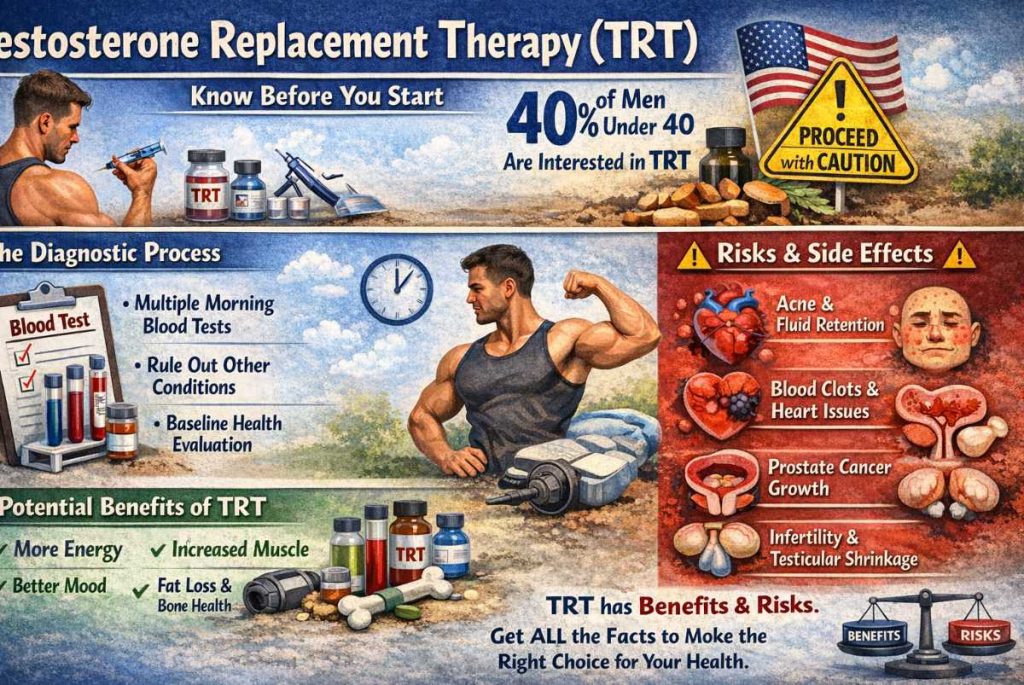
Testosterone replacement therapy, also known as TRT, has become increasingly popular in recent years. So much so, that roughly 40% of American men younger than 40 years old have expressed interest in this type of supplementation, according to US Pharmacist.
Of course, there is a believed need for it. More and more men are experiencing low testosterone, causing the “low-T boom” to form. Such a movement could have dangerous consequences, though, and being in-the-know is encouraged, especially before you begin TRT treatment.
But knowing what TRT involves is only one aspect. Low testosterone can be caused by numerous conditions, so this replacement therapy might not be the best option for you personally. If you want to make an informed decision, use the information provided below.
The Diagnostic Process
Although you might be eager to begin TRT, understanding the diagnostic process early on will ensure you are prepared. Not knowing what the treatment entails could have an impact on your health and safety. It might also leave your expectations running wild.
Such an issue might not seem too important, but it will be when you do not receive the results you want at the speed you believe to be correct. So, TRT is not a quick fix.
TRT is a significant – often lifelong – medical commitment, so it does require thorough thought and testing. Your doctor will do the latter. There are potential side effects, too, so your choice must be thoroughly considered by yourself and your healthcare professional.
Because of this, it is important to rule out other conditions and causes for your symptoms of low testosterone. Underlying health issues like depression, iron overload, and sleep apnea might be to blame.
The diagnosis process is not quick either. As testosterone levels fluctuate naturally throughout the day, confirming persistently low levels – known as hypogonadism – requires multiple early morning blood tests. Not only that, but your baseline health markers will also need to be established through initial testing.
The Potential Benefits
After learning about the diagnostic process, you should then move on to understanding the potential benefits. This is often the deciding factor for people choosing treatment. Not all people who use TRT will experience the same improvements, so all benefits are only potentials – remember this. It will largely depend on the underlying cause of hypogonadism you have.
Some benefits you could experience include boosted energy, decreased body fat, enhanced libido, improved bone density and mood, and increased muscle mass and strength. In short, if this treatment works for you, your health could vastly improve.
Of course, knowing the potential benefits helps your set realistic expectations, too. TRT is not the fountain of youth, no matter how much you wish it were, and it might not be beneficial to you right away. Instead, by learning about the process and benefits, you will understand that any improvements you experience are gradual. Some improvements require weeks or months to occur.
The Various Risks and Side Effects
As you could be on testosterone replacement therapy treatment indefinitely, it is crucial to know the risks and side effects. Most medications and treatments do have risks associated with them, but some TRT side effects are significant. For example, you might experience these issues: acne, fluid retention, and possible breast enlargement.
More serious risks range from raising the risk of blood clots and heart attack to accelerating the growth of existing prostate cancer. TRT has also been proven to suppress the body’s natural testosterone production and sperm count, resulting in fertility issues and testicular shrinkage. This might not be a good option if you want to have children in the future.
You must be aware of all the risks and side effects associated with this treatment to ensure you make an informed decision.
To conclude, testosterone replacement therapy is beneficial to many people, but there are also various risks and side effects. Knowing all of the information – like the details outlined above – before proceeding with treatment could ensure you make the right choice for your body.