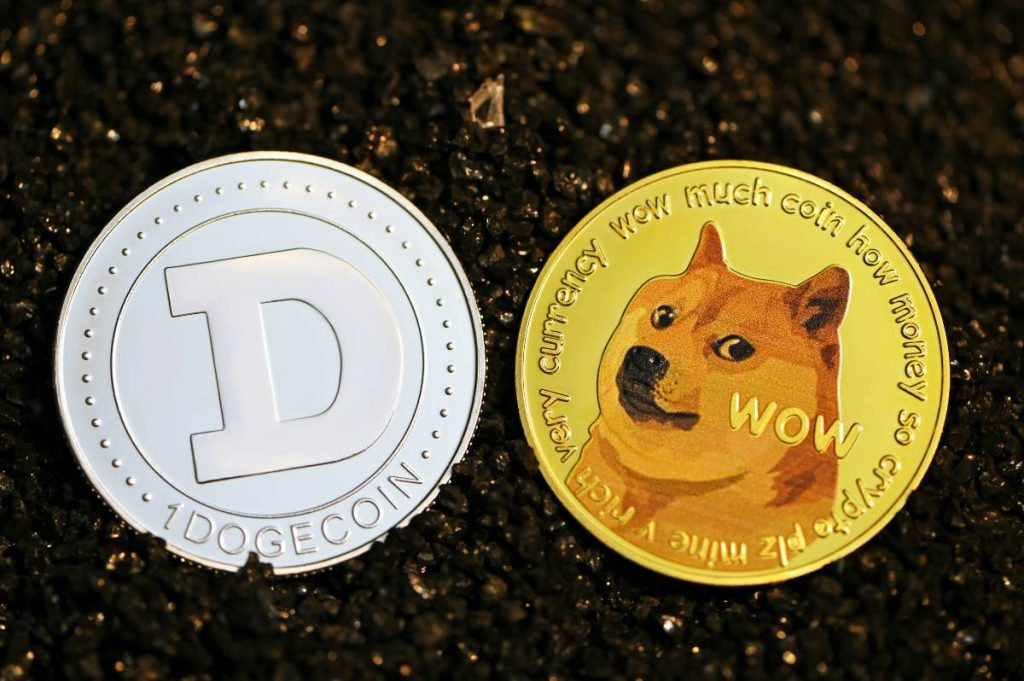
Launched in 2013, Dogecoin (DOGE) became popular as a joke cryptocurrency and the asset that introduced a new category to crypto, that of meme coins.
Born out of the desire to make fun of Bitcoin and all it represented, Dogecoin was all about laughs and giggles, and at first, no one took the token too seriously, not even its creators, who stated from the very beginning that their sole intention was to produce a caricature of the leading coin that would highlight the absurdity of the crypto phenomenon.
Well, their plan worked like a charm: Dogecoin brought humor and fun to crypto and caused plenty of laughs, almost as many as the criticisms it has received for its vacuousness.
However, the Dogecoin of today is a very different animal than it was when it started out. Its value increased substantially over time, as can be seen on platforms like Binance, Coinbase, and Gemini that track the live Dogecoin price.
People may have laughed at it, a natural reaction since that’s what the token was intended for, but its price surge and evolution over the years prove that Dogecoin is moving further away from its humble and humorous beginnings and is now developing into one of the most notable players in the industry.
Elon’s favorite crypto
Dogecoin may have well remained a lighthearted crypto without any real prospects of growing into something bigger if it weren’t for the intervention of a certain public figure who pulled it out of the shadows and thrust it into the spotlight.
We’re obviously referring to Elon Musk, the founder and CEO of SpaceX and Tesla, and the richest man in the world, who happened to take an interest in the original meme coin.
Musk’s repeated posts referencing Dogecoin directly or hinting at it in a cryptic manner were the main driving factor behind Dogecoin’s rise. He first mentioned the token in July 2020, when he tweeted a meme of Dogecoin taking over the financial system, accompanied by a caption that read “It’s inevitable”.
The message that Elon wanted to send out was obvious. People became intrigued, and the Dogecoin price increased slightly as a result.
Later that year, the mogul posted about Dogecoin again in a tweet that simply said “One Word: Doge.” This time, the post caused a more intense reaction, with the token jumping 20%.
Musk’s tweets from February 2021 added fuel to the fire by describing DOGE as “the people’s crypto”, and saying there are “No highs, no lows, only Doge”. This triggered a 40% spike for the meme coin.
However, the most impactful tweet was the one from April 2021. Musk posted an image captioned “Doge Barking at the Moon”, which caused Dogecoin to rise by over 100% in a matter of days. In December of the same year, Musk announced Tesla would start accepting payments in DOGE for certain products, sparking a new price increase of 20%.
Over the following years, Musk continued to show his support for Dogecoin through various statements. Each time he would touch upon the topic, the token would go up in price.
Therefore, Musk’s contribution to Dogecoin’s ascent has been substantial, not only because of the repeated price spikes it triggered, but also because him talking about the asset increased awareness and adoption. This brought Dogecoin to the attention of millions of traders and investors from all over the world and prompted exchange platforms like Binance and Coinbase to list the asset.
So, if Dogecoin ceased to be just a joke and managed to enter the top ten largest cryptocurrencies in the market (currently on the ninth spot), it’s also because of Musk’s influence.
Dogecoin ETF approval
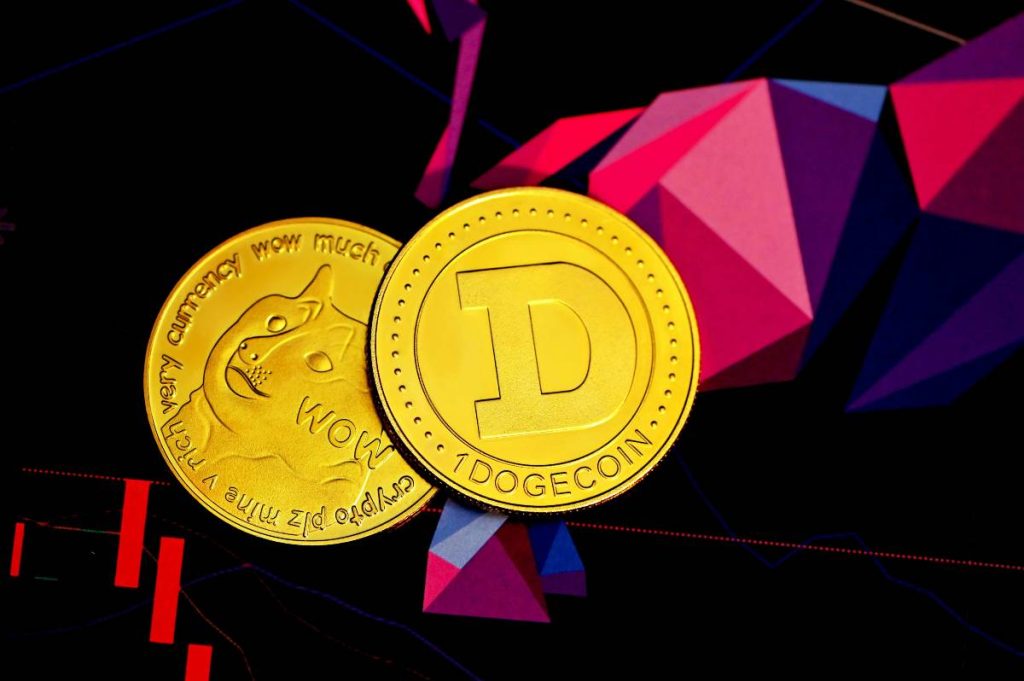
The approval of the first spot Dogecoin exchange-traded fund (ETF) back in September 2025 offers perhaps the biggest proof that Dogecoin has indeed evolved a lot from its early days. It took asset managers years of filing applications and documents to get the United States Securities and Exchange Commission (SEC) to give the green light for the launch of crypto-based ETFs.
Known for its harsh stance on crypto, the regulator rejected many requests until it finally gave the seal of approval for the first spot Bitcoin and Ethereum ETFs in 2024. So, to have an ETF product that tracks the live price of DOGE seems a bit surreal.
The inclusion of Dogecoin into the Rex-Osprey DOGE ETF (DOJE), a financial product that can be accessed through traditional brokerages, boosts the token’s legitimacy as a financial instrument and invites both retail and institutional investors to include it in their portfolios without actually having to own the asset and deal with wallets and other management tasks.
The popularity of crypto ETFs has grown significantly since their launch, with both BTC and ETH ETFs attracting massive inflows. Although Dogecoin is a much smaller coin compared to the two market leaders, the DOGE ETF could also benefit from the increasing ETF demand.
Growing utility
Despite Elon Musk’s unwavering support and the more recent ETF launch, Dogecoin can’t survive in the harsh crypto market unless it develops real utility. Its long-term success hinges on its ability to expand its use cases beyond simple payments. Developers involved in the project are aware of his reality and have already started taking measures in this respect.
The DogeOS has forwarded a proposal to Dogecoin Core for an upgrade that would introduce zero-knowledge (ZK) proof verification. This would increase transaction speed and enable the network to support advanced features like smart contracts, zk-rollups, and decentralized applications (dApps).
While these advancements are still in the early stages, they show that Dogecoin is indeed committed to overcoming the limitations that have kept it in place until now and step into a new phase of development, one marked by innovation, efficiency, and functionality.