

Starting a food truck business is sure to feel exciting, but before you serve your first customer, a local health department inspector must approve your setup.
Passing that inspection on the first try saves time and stress, helping you open faster and operate with confidence.
So, let’s look at the steps you should take.
Check Your Local Health Department Rules Before Anything Else
Every city sets its own health standards, and food truck business owners often miss details that stall approval.
Start with your county’s health department site, then confirm in person what rules apply to mobile vendors.
Some areas require commissary kitchens for prep. And some demand separate gray water disposal. Treat these codes as your roadmap, not red tape.
Collect printed guidelines, highlight equipment specs, and post them inside your truck so every setup decision aligns with official requirements.
Secure Every Permit and License You’ll Need Early
Permits often take longer than expected, and missing one can shut your window before your opening day.
So, start with a business license, then check for mobile food vending, fire safety, and parking permits.
Each agency moves on its own timeline, so apply in parallel instead of waiting for one to finish. Keep digital copies stored in a shared folder – labeled and dated.
Inspectors like seeing organized paperwork, and early preparation proves you run a compliant operation.
Set Up a Proper Handwashing Station That Inspectors Approve
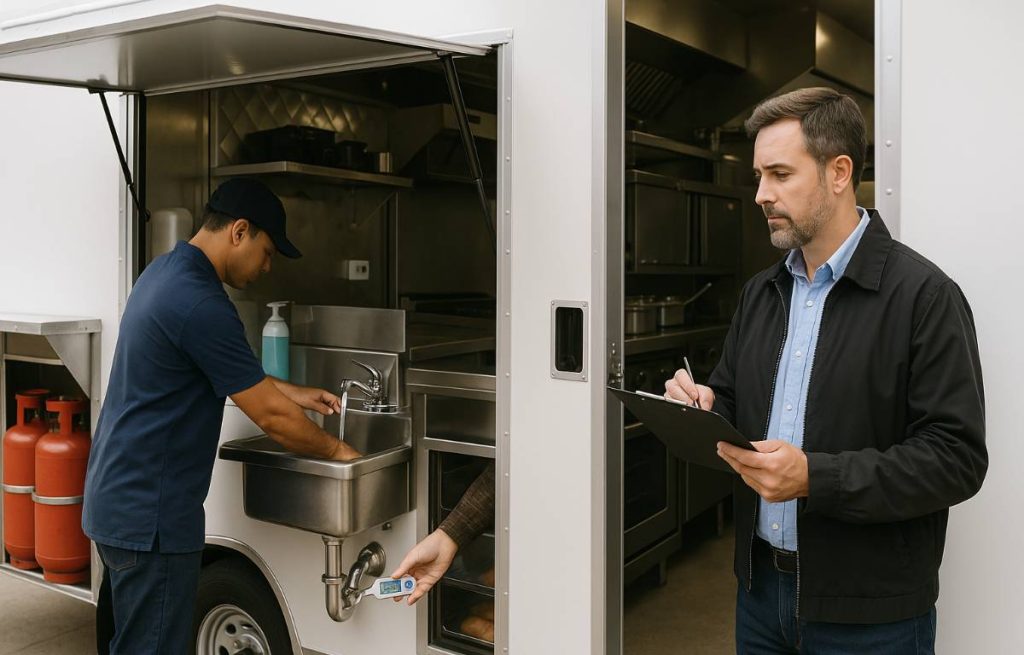
Health officers always check handwashing first because it signals how you handle sanitation overall.
Your sink needs running hot and cold water, liquid soap, disposable towels, and a covered waste bin within reach.
Many trucks fail inspection over missing paper towels or low water pressure, which are small details that carry big consequences. Keep extra gallons of potable water on hand in case pressure drops.
Test your sink before every shift.
And log the checks to show inspectors you maintain clean, functional equipment daily.
Keep All Cooking and Storage Equipment NSF Certified
Inspectors rely on the NSF mark to confirm your tools meet sanitation standards.
Surfaces must clean quickly, resist rust, and handle daily use without breaking down. Choose stainless steel prep tables, commercial fridges, and sinks that display clear certification labels.
Many new operators shop online for restaurant cooking equipment to compare models and confirm those details before purchase.
Cleanable, durable, and approved equipment helps you pass inspections with confidence every time.
Store Fuel and Propane the Way Safety Codes Require
Fuel storage gets close attention during inspection because improper handling can cause fires or explosions.
Secure all propane tanks upright with straps or brackets; never loose inside the truck. Tanks should sit outside or in a ventilated cabinet, with valves accessible for quick shutoff.
Inspectors often ask to see your fire extinguisher placement, so keep one rated for grease and gas nearby.
Use approved connectors and test them regularly for leaks with soapy water. Local fire departments can pre-check your setup for compliance.
Correct storage proves you treat safety as part of daily operations, not an afterthought.
Maintain Food Temperatures the Right Way From Prep to Service
Temperature control ranks among the most common failure points in food truck inspections. Keep cold foods at or below 41 degrees Fahrenheit and hot foods above 135 degrees.
Install accurate thermometers in every cooler and holding unit, and verify readings throughout the day. And use shallow pans so heat or cold circulates evenly.
Inspectors will often check your logs, so record temperatures during prep, storage, and service.
This routine proves consistency, not luck, and keeps your food safe. Maintaining proper temperature safeguards both customers and your license from preventable violations.
Prepare for Inspection Day With a Full Mock Walkthrough
A mock inspection exposes problems before the official one does. Walk through your truck with a checklist that mirrors your health department’s inspection form.
Verify sanitation, water temperature, food storage, and fire safety one section at a time. Ask a colleague or manager to act as the inspector to catch blind spots.
Check expiration dates, restock soap and gloves, and label every container clearly. And keep documentation in a clean folder ready for review.
Photograph compliant setups for training or reference. This proactive check helps your team move confidently when inspectors arrive, showing full readiness and operational discipline.