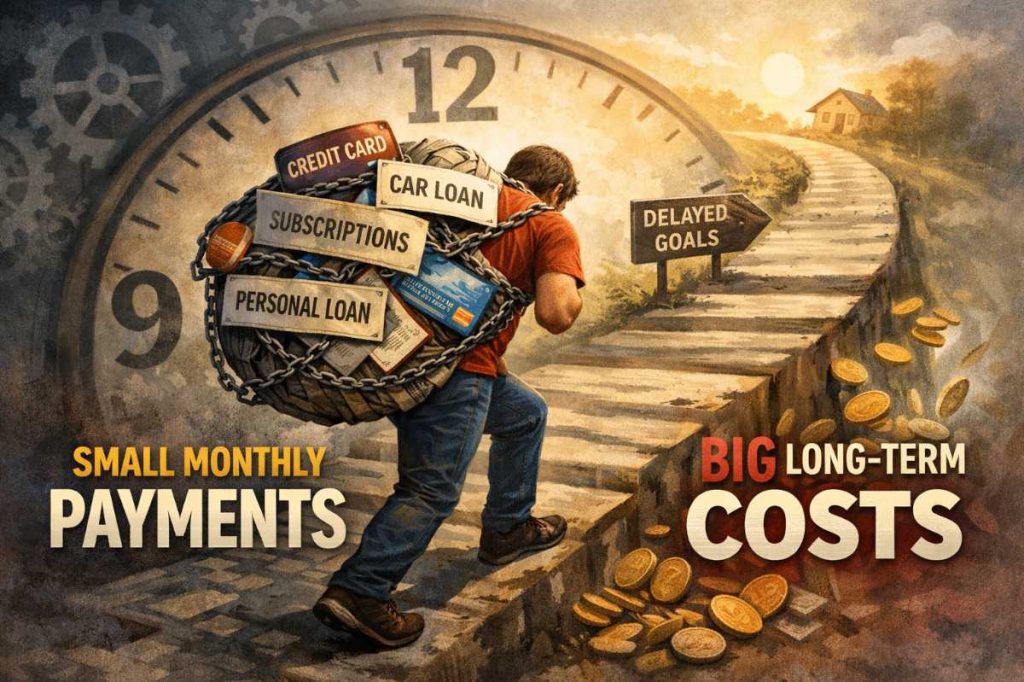
These minor payments monthly may be viewed as harmless and easy to manage and incorporate in everyday life. This is the way they are expected to feel. The majority of the people base their financial decisions on how they can comfortably include a payment to an already presented budget without considering how the payments would accumulate with the lapse of time. This kind of attitude is prevalent with credit cards, automobile loans, subscriptions and personal loans.
Individual such payments may not be that big, but a set of them can quietly restrict the freedom of finances and drag the process of the fulfillment of long-term goals. The cause of the miscalculation of little payments is also a step in the right direction of developing a more knowledgeable perspective on debts and economically prudent budgeting.
The Focus on Affordability by Month
One of the major factors that make small monthly payments not a serious consideration is the cost-effectiveness of payment in the short term. Lenders, advertisers as well as budgeting tools often describe the costs in terms of monthly figures because they appear friendly.
When a sum that is paid out is seen to be a small percentage of the earnings then it is easy to think that the overall cost must also be fair. This framing is motivating to take short-term comfort-focused choices rather than the financial impact in general.
Such an amount can cause people not to pay attention to the size of the payment period and the rate of interest. A simple payment now could take years in spending money which would otherwise be saved or invested. Small debts accumulate and eventually, this has caused a financial scenario where there is skimming of money payment despite the fact that no single payment appears excessive.
The Interest Effective With Time
Interest is another significant aspect that causes the fraud in little payments. When payment is kept at a low level, then most of it is normally spent on interest rather than settling the balance. This will be especially the case with revolving credit where minimum limits will be established to extend the repayment periods. One can occasionally fail to notice the gradual movement without carefully searching statements or amortization schedules.
The interest compound and the total cost of acquiring the loan is increased by a large factor. Even a modest monthly commitment could prove to be a big financial burden in the long run. To discover the extent of overpayment made by one than the amount s/he has been actually borrowing is an eye opener to many individuals.
When such examples come into play, it leaves people with other options like the debt consolidation Burnaby which should be used to offset such to see to it that the interests are paid in the long term.
Psychology Distance to Cost of All
The other reason that has the small payments underrated is psychological distance of the aggregate cost. Human beings are inclined to think shortsightedly and lay stress on the current month instead of the following years.
In case of low payment, it reduces the emotional worth of the purchase and hence justification of decisions made becomes more comfortable and maybe not felt uncomfortable as compared to when it is considered as a lump sum.
The monthly expense to the total commitment difference in the mind of the financial consciousness is watered down. All that cost is spread out and is abstract and as such does not cause the same caution as a high start-up cost. This tendency could ultimately lead to recidivation of borrowing decisions that can be life-long seemingly harmless but in total, they have a load on the finances in the long run.
Accrual of Financial Obligations
Small payments also will tend to increase many times. Subscriptions, funding plans, installment loans are often attached and all of them seem to be something uncomplicated at that time. They do not result in an immediate re-examination of spending habits as none of them do this per se. At one point a certain good percentage of income is already set aside before any of the leisure buying will set in.
This accumulation reduces the potential of being adaptable and tough. Unexpected expenses are harder to manage, monetary targets are delayed, and extra credit is used. It is not one great mistake, it is a number of little ones, which shift the priorities in finance without uttering a sound. It is vital to note that this trend needs to be understood to be in control.
Re-Evaluating the Evaluation of Payments
It is time to change the perspective in order to prevent the tendency to underestimate minor payments. Instead of asking the question of whether or not a payment can fit in the monthly budget, it is better to ask the question of how many months can it last and how many things can it keep off financially.
The way of considering payments as an entitlement to the future income could be more beneficial and visible to see the true cost of it.
This reprocessing favors strategic creation of choices and priorities. The people are in a better position to make fewer commitments and pay the obligations faster when they are aware of the effect of small payments in the long-term goals. The key to sustainable debt management and long-term financial stability is in being conscious of the issue as opposed to being bound to it.